The Project
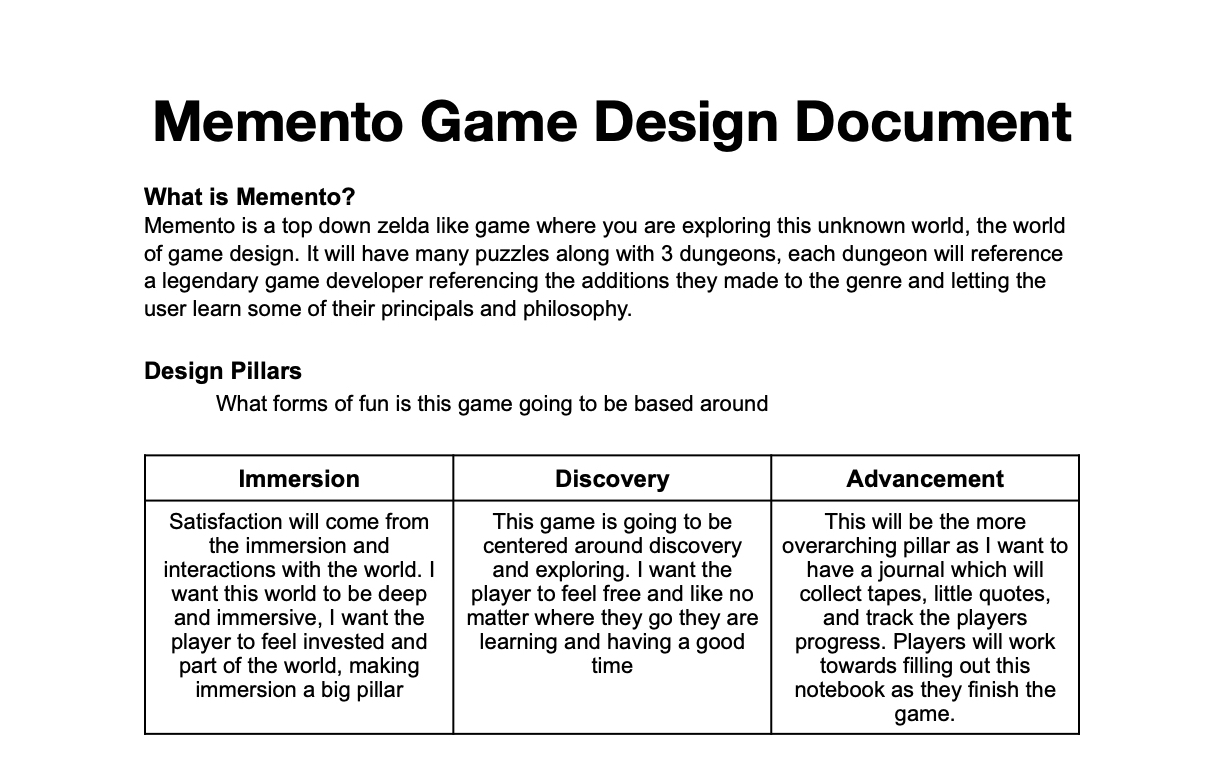
Memento is a conceptual top-down adventure game that acts as an interactive museum of game history. It pays homage to classic designers like Ron Gilbert, John Carmack, and Shinji Mikami. The core artistic concept is “genre-fluidity” with each dungeon meant to shift gameplay genres to match their design philosophies, from point-and-click puzzles to FPS combat to horror exploration.
What I Did & Creative Approach
I created a full Game Design Document (GDD) detailing design pillars, gameplay loops, pacing, audience targeting, worldbuilding, aesthetics, and player motivation. My largest creative challenge was figuring out how to weave together conflicting design philosophies (like the slow logic of adventure games vs the fast reflexes of shooters) into a single, cohesive game. I also included marketing and teaching sections to show a professional approach.
What I Learned
This was my first experience building a full design document from scratch, and it showed me how vital documentation is for focus and team alignment. It taught me that good design is about subtraction as much as addition; to make the mashup of genres work I had to cut through the unnecessary ideas to keep the core experience from being too overwhelming. This skill has directly improved how I scope my projects.
Why I did this project
I created this project to explore one of the biggest issues in game development: the lack of documentation and preservation. I wanted to treat games and their design as parts of history that are worthy of remembering. By writing a design doc that honors the legacy of creators like Gilbert and Mikami, I wanted to show that the “rules” behind a game are just as artistically significant as the visuals or music.